
Single Super Phosphate (SSP) Fertilizer Production Plant
Usage: The production of Single Super Phosphate Powder Fertilizer
Production capacity: 5-30 TPH
Raw materials: Phosphate Rock, Sulfuric acid, Additives, etc.
Form: Powder form
Introduction
Single Super Phosphate powder production Plant convert phosphate rock and sulfuric acid into a stable, free‑flowing fertilizer powder that supplies water‑soluble P₂O₅ (typically ~16–20%), calcium, and sulfur. Plants are designed for continuous or semi‑continuous operation and can be scaled from small modular units (tens of tonnes/day) to large industrial lines (hundreds of tonnes/day) depending on feedstock availability and market demand. The line focuses on controlled acidulation, curing, size reduction, dust control, and final packing.
Phosphate rock — finely ground to a target fineness (commonly 100 mesh or equivalent) to ensure complete acid reaction.
Concentrated sulfuric acid — commercial grade used to acidulate the rock and form monocalcium phosphate and gypsum.
Process water — for dilution, slurry control, and equipment washing.
Minor additives — anti‑caking agents, micronutrients, or recycled fines may be added to meet product specs.
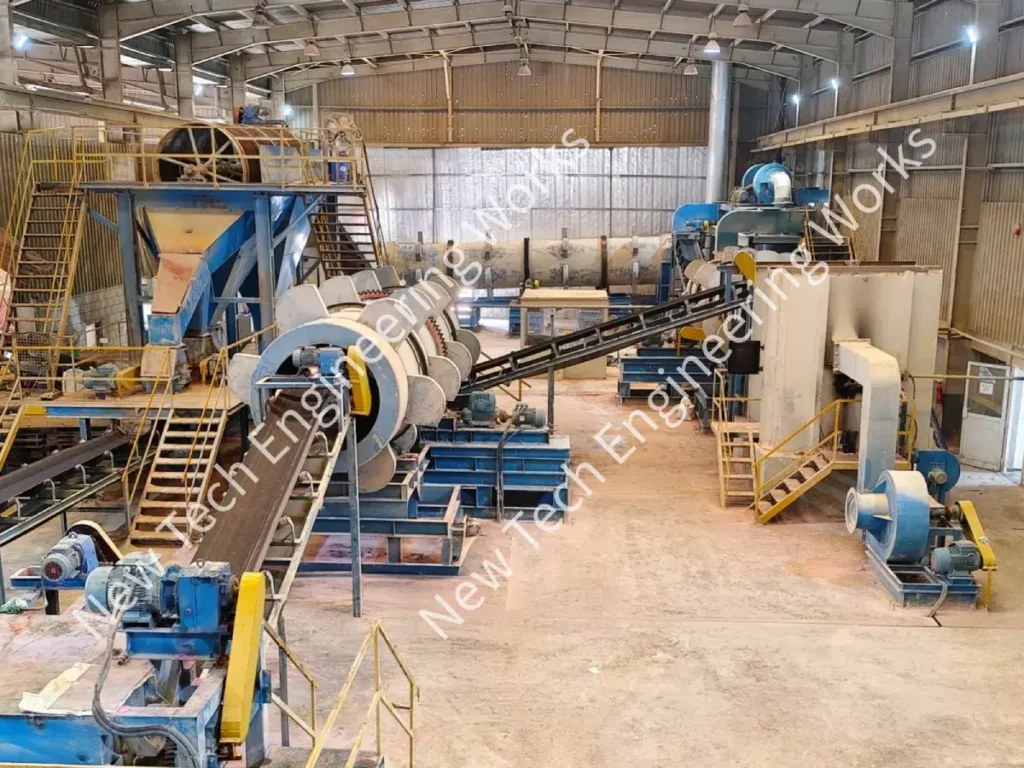
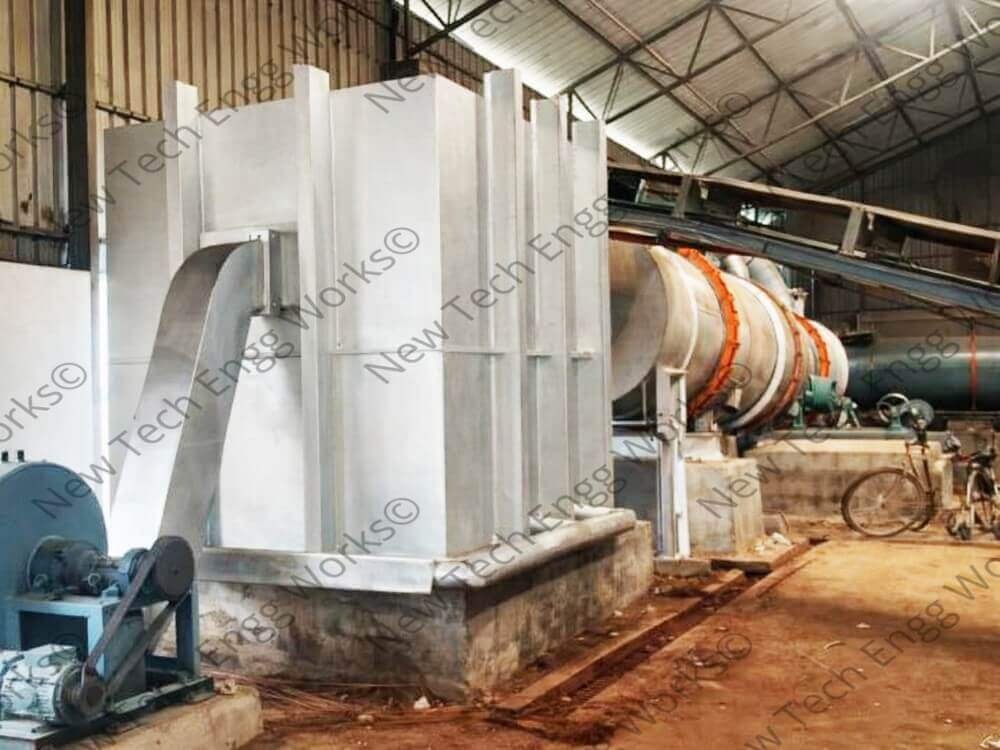
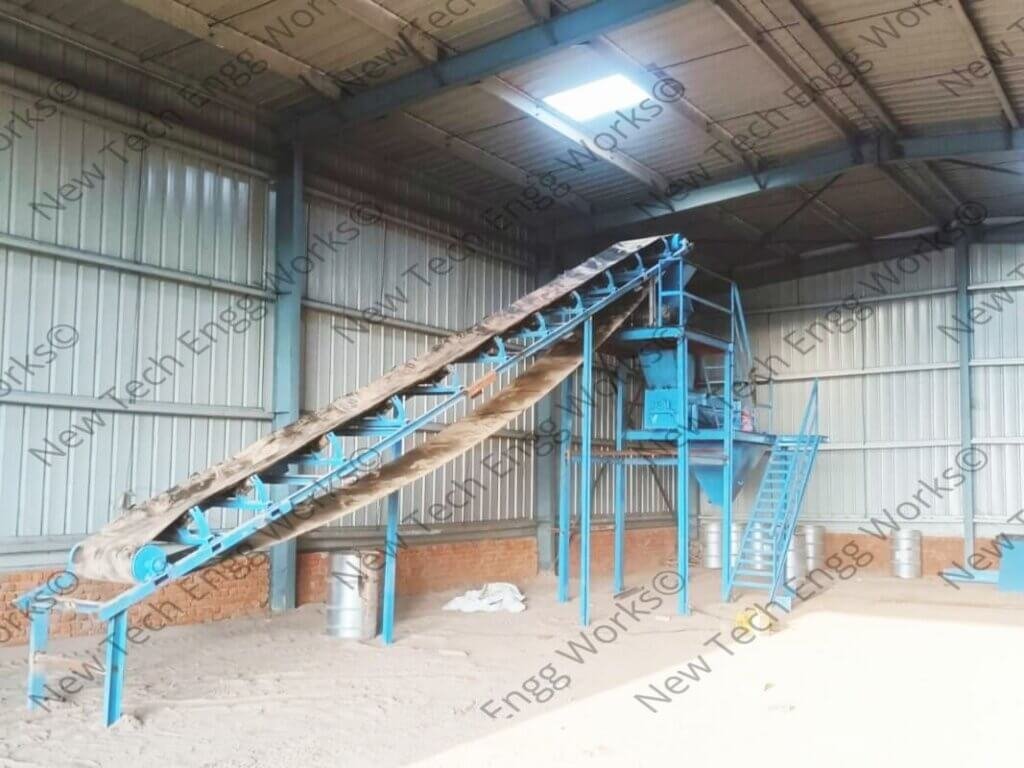
Plant Equipment Images
Production Process
- Separate storage for phosphate rock, acid, and additives: rock in covered bunkers or silos with feeders; acid in corrosion‑resistant tanks with secondary containment.
- Material handling uses belt conveyors, screw feeders, and metering systems with dust enclosures.
- Environmental controls at storage include humidity protection for rock, acid leak detection, and local exhaust for dust and acid fumes.
- Grinding — ball mill or vertical roller mill to achieve the required particle size for efficient acidulation.
- Acidulation mixer / reactor — lined or corrosion‑resistant mixer where measured acid is added to rock to form a slurry; mixing intensity and acid addition rate control free acid and available P₂O₅.
Denning / curing — a den or curing drum/bed where the slurry slowly reacts and solidifies; controlled residence time and temperature stabilize available phosphorus.
Crushing and screening — cured cakes are broken, milled, and screened to separate finished powder from oversized lumps; oversize is recycled to crushing.
Drying and cooling (optional) — if moisture exceeds specification, rotary or fluidized bed dryers and coolers reduce moisture to target levels.
Dust collection and gas scrubbing — baghouses, cyclones, venturi scrubbers, and multi‑stage scrubbers capture particulates and acidic/fluorinated gases to meet emission limits.
Packing and storage — automatic bagging or bulk loading systems with inline quality checks and moisture control.
Technical Specifications
MODEL SERIES
NTEW-SSP-26
POWER INPUT
250 KW – 350 KW
Voltage Requirement
380–440V AC, 3 Phase
PRODUCTION CAPACITY
Varies: 5–30 TPH
Automation Level
Semi OR Fully Automatic
Control System
PLC Automated
LAND REQUIRED
Based on Plant Capacity
WEIGHT
Based on Plant Capacity
CERTIFICATION
ISO 9001:2015 / CE
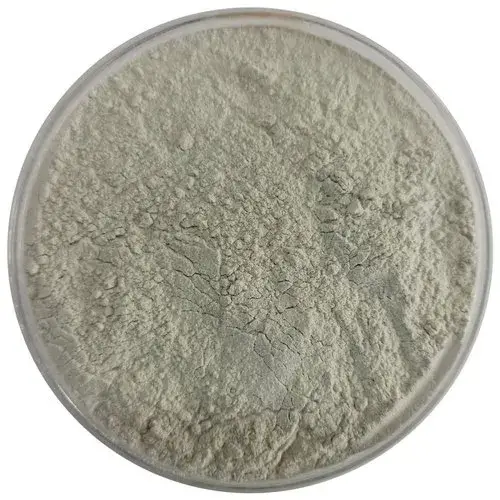
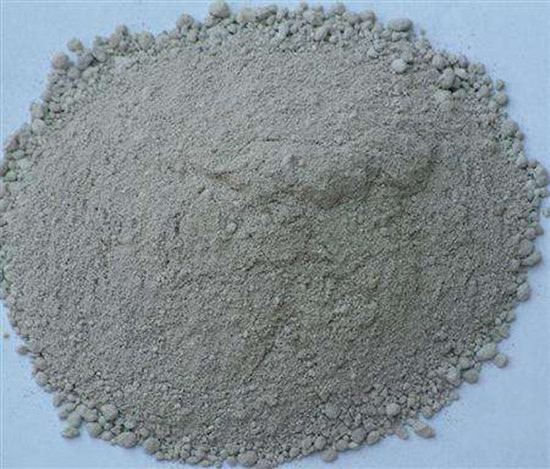
Finished Powder
You can produce high-quality SSP powder with consistent particle size and uniform nutrient content to meet diverse agricultural requirements. The production plant is designed to ensure efficient processing, minimal material loss, and reliable output quality throughout the manufacturing cycle. The finished powder offers excellent soil compatibility, easy application, and effective phosphorus availability, helping improve crop growth and soil fertility while maintaining cost-effective production and operational efficiency.
Related Projects
Small Scale Compost Fertilizer Production Plant
Standard and customizable Designs available
Get in Touch
Office & Works
CN-29, Near 66KVA Power House, Rainbow Road, Muzaffarnagar-251003, Uttar Pradesh, India.
Sales & Exports
ntew.india@gmail.com
ntew2006@gmail.com
Contacts
+91 7906999631
+91 9897720435
+91 9760072786